Getting Around
Budapest Train Stations and How to Plan Regional Trips
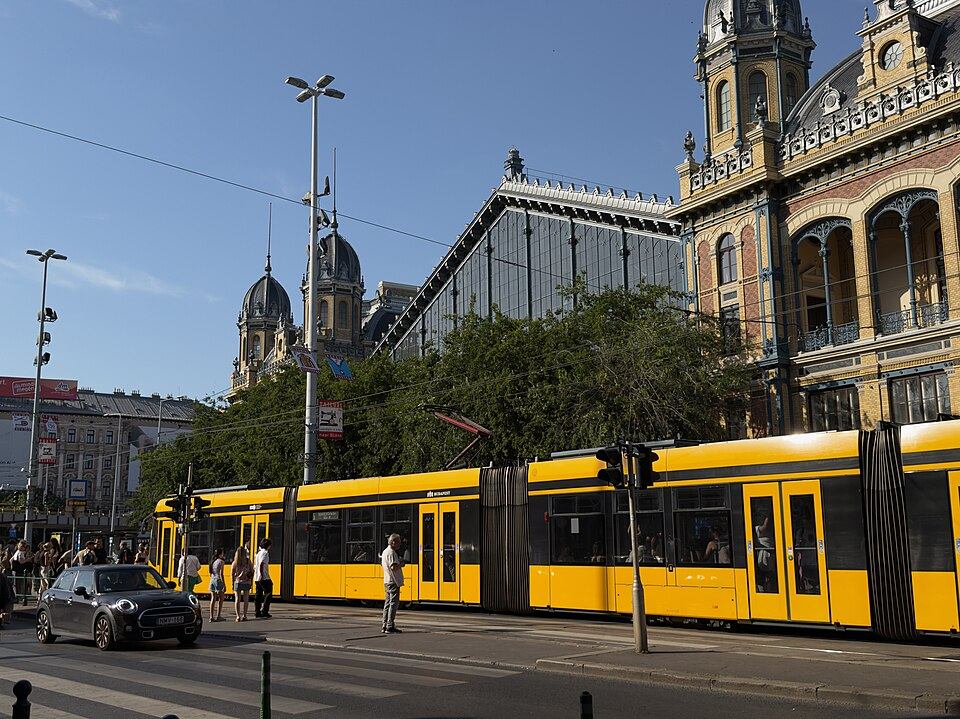
Photo: Mike is Michi via Wikimedia Commons, CC BY-SA 4.0

At a Glance
- Budapest has three major train stations: Keleti, Nyugati, and Deli, each serving different regional and international routes.
- Keleti is the largest and handles many international and long-distance domestic services.
- Nyugati, a striking 19th-century building, serves many regional lines.
- Deli, on the Buda side, mainly covers routes toward the south and west of Hungary.
- All three main stations connect directly to the metro system.
- Hungarian State Railways (MAV) operates most domestic and many international routes; confirm current booking details on its official site.
In this guide
- Keleti Station: The Main International Hub
- Nyugati Station: Historic Architecture, Regional Routes
- Deli Station: The Buda-Side Terminal
- Booking Regional and International Train Tickets
- Planning a Day Trip by Train
- Getting to the Stations From Central Budapest
- Comparing the Three Main Stations
- A Note on International Rail Travel
If your Budapest trip includes a side journey to Vienna, Lake Balaton, the Danube Bend towns, or another Hungarian city, you'll end up at one of the capital's three major train stations. Each has a distinct character and generally serves different regions, so knowing which one you need, and how to get there, saves confusion on travel day. This guide covers the stations themselves, how regional and international rail travel generally works, and how to combine it with the rest of your transportation plan.
Keleti Station: The Main International Hub
Keleti ("Eastern") Station is Budapest's largest and busiest terminal, a grand 19th-century building that handles a large share of the city's international connections along with major domestic long-distance routes. If you're taking a train toward Vienna or other international destinations, there's a good chance you'll depart from or arrive at Keleti. The station sits on the M2 (red) metro line, making it simple to reach from most parts of the city without a transfer.
Nyugati Station: Historic Architecture, Regional Routes
Nyugati ("Western") Station is almost as architecturally striking as Keleti, with an iron-and-glass train hall that's worth a glance even if you're not catching a train there. Nyugati tends to serve more regional and some domestic routes rather than the bulk of international traffic, though route assignments can shift over time, so always confirm your specific departure station when booking rather than assuming based on general patterns. It connects to the M3 (blue) metro line and several tram routes.
Deli Station: The Buda-Side Terminal
Deli ("Southern") Station sits on the Buda side of the river, near the base of Castle Hill, and generally serves routes heading south and west, including some connections toward Lake Balaton. Because it's on the Buda side, it's a convenient starting point if your accommodation is in that part of the city; it connects to the M2 (red) metro line.
Booking Regional and International Train Tickets
Hungarian State Railways, commonly known as MAV, operates the majority of domestic rail routes along with a number of international connections. Ticketing systems and booking portals for Hungarian rail have changed over time, so rather than pointing you to a specific booking subdomain that might be outdated by the time you travel, the safest approach is to start at the official MAV Group site and navigate from there to current timetables and ticket purchasing. Build in some flexibility with timetables, since regional schedules can be less frequent than you might expect from a commuter rail comparison back home, and double-check whether your route requires a seat reservation in addition to a ticket.
Planning a Day Trip by Train
Several popular day trips from Budapest, including Szentendre, the Danube Bend towns, and Lake Balaton, are reachable by regional train, though some of these routes are also served by boat or bus depending on the destination. If you're deciding between a day trip to Szentendre, a broader loop through the Danube Bend, or a trip out to Lake Balaton, each of those guides covers the specific transportation options in more detail, including which station to use and roughly how long the ride takes.
A Sample Planning Checklist
- Confirm which station your train departs from; don't assume it matches the station you'd expect based on direction of travel alone.
- Check the current timetable close to your travel date, since regional schedules can change seasonally.
- Decide whether you need a seat reservation, which is required on some but not all routes.
- Arrive with buffer time, especially at Keleti, which can be busy and sprawling during peak travel periods.
- Keep a printed or saved digital copy of your ticket in case of connectivity issues at the station.
Getting to the Stations From Central Budapest
All three main stations connect directly to the metro network, which is generally the fastest way to reach them from a central hotel, especially during the day when traffic can slow buses and taxis. If you're arriving with luggage for a multi-day side trip, review our public transportation guide for how ticketing and the metro system work, since the same tickets and passes apply to the ride to the station.
Comparing the Three Main Stations
| Station | Metro Line | General Route Focus | Side of River |
|---|---|---|---|
| Keleti | M2 (red) | International and major domestic long-distance | Pest |
| Nyugati | M3 (blue) | Regional and some domestic routes | Pest |
| Deli | M2 (red) | Routes south and west, including toward Balaton | Buda |
A Note on International Rail Travel
Train travel between Budapest and neighboring countries, such as Austria, is a well-established option for travelers who prefer rail to flying for a short regional hop. Journey times and the specific station used can vary by operator and season, so check current schedules directly rather than relying on a fixed travel time from an older source.
Common Mistakes to Avoid
- Assuming all regional and international trains depart from the same station; Budapest has three main terminals serving different routes.
- Not checking whether a specific route requires a seat reservation in addition to a standard ticket.
- Underestimating how busy and large Keleti Station can feel during peak travel times, leading to rushed connections.
- Relying on an old or guessed booking website URL instead of starting from the official MAV Group site.
- Forgetting that a day-trip destination may also be reachable by boat or bus, which can sometimes be more convenient than the train.
Frequently Asked Questions
Which station do I use for a train to Vienna?
International long-distance routes, including many toward Vienna, commonly use Keleti Station, but always confirm your specific departure station on your ticket or booking confirmation rather than assuming.
Do I need to arrive early for a regional train?
Regional trains generally don't require the same lead time as a flight, but arriving 20 to 30 minutes early gives you buffer to find the right platform, especially at a large station like Keleti.
Can I buy a train ticket at the station instead of online?
Yes, ticket counters and machines are available at the main stations, though buying online in advance can save time and sometimes secure a seat reservation on busier routes.
Is Nyugati Station worth visiting even if I'm not catching a train?
Its iron-and-glass train hall is architecturally notable and visible from the street, so it's a reasonable stop if you're already in the area, even without a ticket in hand.
How do I get from my hotel to the right train station?
All three main stations connect to the metro network, so the simplest approach is usually to ride the relevant metro line directly to the station rather than relying on a taxi during busy traffic periods.