Day Trips & Seasons
How to Plan a Danube Bend Day Trip
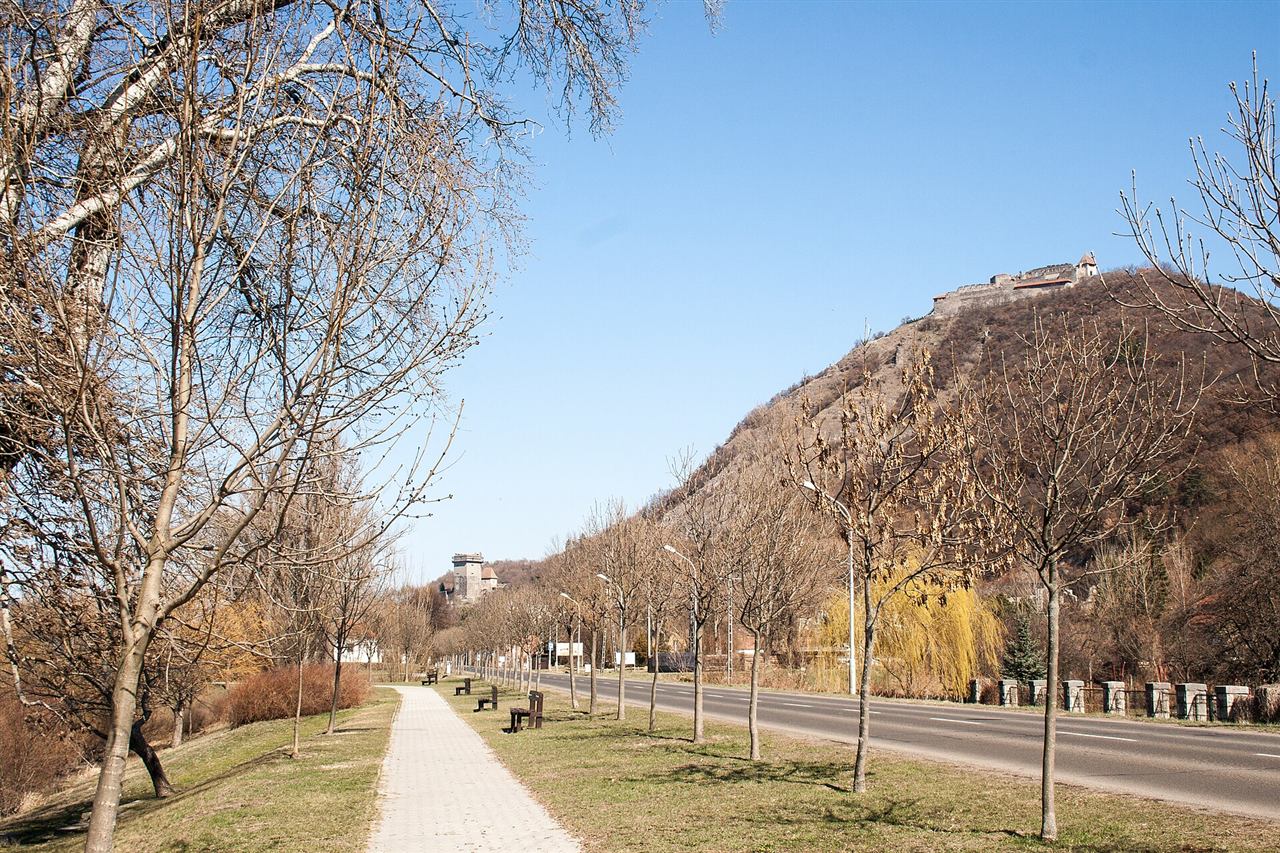
Photo: Szilas via Wikimedia Commons, Public Domain

At a Glance
- The Danube Bend covers three towns often combined in one day: Szentendre, Visegrad and Esztergom.
- Visegrad has no train station on the town side of the river, so most visitors arrive by bus or seasonal boat.
- A two-stop day is far more comfortable than a three-stop day for independent travelers using public transport.
- The Visegrad citadel involves a steep uphill climb with a reward view of the river's sharpest curve.
- Esztergom Basilica is the largest church in Hungary and anchors the region's second major town.
- Guided bus tours simplify the logistics of a multi-stop day considerably compared with independent travel.
In this guide
- What Makes the Danube Bend a Single Day-Trip Region
- Choosing How Many Stops to Attempt in One Day
- Getting Between Szentendre, Visegrad and Esztergom
- Visegrad Citadel: The Danube Bend's Signature View
- Esztergom Basilica and the Border Bridge
- Sample One-Day Itineraries for Two or Three Stops
- A Clock-Time Plan for a Szentendre and Visegrád Day
- History Worth Knowing at Each Stop
- Season, Weather and Day-of-the-Week Checks
- When Independent Travel Beats a Guided Tour (and Vice Versa)
The Danube Bend refers to the stretch of river north of Budapest where the Danube curves sharply between hills on both banks, and it is home to three towns that often get mentioned together: Szentendre, Visegrad and Esztergom. Each works as a standalone half-day trip, but travelers with only one free day sometimes want to see more than one stop at a time. That is a different kind of planning problem than a single-town visit, because connections between the three towns are less frequent and less direct than the routes that link each one back to Budapest.
If you have already decided Szentendre alone is enough for your trip, the dedicated Budapest to Szentendre day trip guide covers that town in more depth, including its Old Town, museums and the open-air Skanzen site, without the added complexity of combining stops.
What Makes the Danube Bend a Single Day-Trip Region
Szentendre, Visegrad and Esztergom sit within a fairly compact stretch of the river north of Budapest, close enough to each other that they get grouped together in guidebooks and tour itineraries as one region rather than three separate destinations. That proximity is relative, though: the towns are connected to Budapest far more directly than they are connected to each other, which shapes almost every decision about how to structure a day here.
Choosing How Many Stops to Attempt in One Day
Trying to see all three towns properly in a single day is ambitious and, for most independent travelers, not realistic without cutting each stop short. Visegrad's hilltop citadel alone involves a climb and a view worth lingering over, and Esztergom's basilica rewards at least an hour of unhurried time. A more comfortable version of this trip picks two of the three towns and accepts that the third becomes a separate future visit, or leans on a guided tour that has already solved the sequencing and transfer logistics. Travelers still deciding how many days to spend in Budapest overall should keep in mind that a Danube Bend day works best as one flexible day within a longer trip rather than the centerpiece of a short visit.
Getting Between Szentendre, Visegrad and Esztergom
Public transport in the Danube Bend was not built primarily to connect these towns to each other — it was built to connect each one to Budapest. That means travelers assembling an independent multi-stop day usually combine a regional bus, with routes running from Budapest's Ujpest bus terminal toward Visegrad and Esztergom, with a direct train to Esztergom from Nyugati station, or with a seasonal river boat that calls at more than one town along the bend. Visegrad does not have its own train station on the town side of the river; the nearest rail stop sits across the Danube and requires a connecting boat shuttle, which is one reason many visitors reach Visegrad by bus instead. Because schedules for buses, trains and seasonal boats all differ, check timing for each leg before you fix a plan rather than assuming you can simply show up and move between towns on short notice. For background on how Budapest's various stations and rail lines work, see the guide to Budapest's train stations and regional trips.
Visegrad Citadel: The Danube Bend's Signature View
Visegrad's main draw is its hilltop citadel, the ruins of a medieval royal fortress positioned to overlook the sharpest curve in the Danube Bend. The climb up is the main physical commitment of a Danube Bend day — it is steep enough that comfortable shoes matter — and the payoff is one of the better river views in the region, taking in the water, the forested hills on the opposite bank, and the lowland plain beyond. Below the citadel, the ruins of a former royal palace give a sense of how significant Visegrad once was as a medieval seat of power, long before Budapest held that role.
Esztergom Basilica and the Border Bridge
Esztergom sits closer to the Slovak border than to Budapest and is anchored by its basilica, the largest church in Hungary and a dome visible from a considerable distance across the flat countryside around it. The town served as Hungary's early medieval capital and religious center, a history that still defines its identity more than tourism does. A pedestrian and vehicle bridge connects Esztergom to the Slovak town of Sturovo across the river, a detail that surprises some visitors who do not realize how close the Danube Bend runs to the national border.
Sample One-Day Itineraries for Two or Three Stops
Which combination makes sense depends on how early you can start and whether you are comfortable juggling connections.
| Itinerary | Stops | Pace | Best For |
|---|---|---|---|
| Two-stop day | Szentendre + Visegrad | Comfortable, unhurried | First-time visitors, travelers without a car |
| Two-stop day | Visegrad + Esztergom | Moderate, more transit time | Travelers most interested in history and the basilica |
| Three-stop day | Szentendre + Visegrad + Esztergom | Tight, limited time at each stop | Guided tours or travelers starting very early |
If you are weighing the Danube Bend against a different kind of day trip entirely, the Budapest to Lake Balaton day trip guide covers a longer, lake-focused alternative that trades river scenery and medieval history for open water and a slower resort pace.
A Clock-Time Plan for a Szentendre and Visegrád Day
Treat the times below as a pacing guide rather than a timetable. Fix the actual departures after checking the operators' current schedules.
| Time of day | Leg | Notes |
|---|---|---|
| Early morning | M2 to Batthyány tér, then HÉV H5 to Szentendre | Arrive before tour groups reach Fő tér |
| Late morning | Szentendre old town and one museum | Pick a single museum rather than several |
| Midday | Bus from Szentendre toward Visegrád | Connections between towns are sparse, so check the last return |
| Early afternoon | Visegrád palace ruins, then the citadel climb | Allow time for the walk up and a rest at the top |
| Late afternoon | Return to Budapest by bus, or train via the Nagymaros side | Keep a buffer in case a connection runs late |
The route through Nagymaros uses the train line to Szob and a short ferry crossing to Visegrád. It is workable but depends on a ferry that follows its own schedule, so independent travelers who want fewer variables often take the direct bus both ways. Buses to the Danube Bend generally leave from the northern M3 terminals such as Árpád híd and Újpest-Városkapu; confirm which one serves your destination.
History Worth Knowing at Each Stop
A little background changes how the ruins and churches read. Visegrád hosted a meeting of the kings of Hungary, Bohemia and Poland in 1335, a gathering that gave the modern Visegrád Group its name. Its palace was later rebuilt in Renaissance style under King Matthias, and the excavated terraces still show how elaborate the residence was. The hilltop fortress above, the Fellegvár, is older and military in purpose, built after the Mongol invasion of the 13th century.
Esztergom was the seat of early Hungarian kings and remains the seat of the country's Catholic archbishop. The basilica's great dome was completed in the 19th century on the site of a medieval cathedral, and the hill beside it holds the remains of the royal castle. The Mária Valéria Bridge, rebuilt after the Second World War and reopened in 2001, now carries pedestrians across the Danube to the Slovak town of Štúrovo; both countries are in the Schengen Area, so a short walk across for coffee is possible, but carry your passport anyway.
Szentendre grew in the 17th century when Serbian settlers moved north as the Ottoman frontier shifted. The Orthodox churches on its narrow lanes and the Blagovestenska church near the main square reflect that heritage, and it explains why the town feels different from Hungarian market towns. The open-air museum, Skanzen, lies outside the center and is a separate trip of its own.
Season, Weather and Day-of-the-Week Checks
The Danube Bend changes more with the season than the city does. In winter, river boats largely stop, daylight is short, and the citadel path can be icy, so stick to buses and trains and pick one or two stops. In summer, midday heat on the Visegrád climb is real, and a morning start makes the day far easier. Spring and autumn offer the best balance of clear views and manageable crowds.
- Many Hungarian museums close on Mondays, so check opening days before you build the itinerary around a specific interior.
- Weekend afternoons bring more day-trippers to Szentendre and heavier traffic on the road back to Budapest.
- If the forecast is poor, choose Esztergom's basilica and Szentendre's museums, which work indoors, and save Visegrád for a clearer day.
- Carry water and snacks on the Visegrád climb, since options near the top are limited.
A car changes the day. Road 11 follows the river, parking is easy to find in the smaller towns, and you can stop at viewpoints that buses skip. The trade-off is the return traffic on weekend evenings and the need for a designated driver if the day includes wine at lunch.
When Independent Travel Beats a Guided Tour (and Vice Versa)
A guided bus tour is the simplest way to attempt all three towns in one day, since the operator handles sequencing and timed transfers that are genuinely difficult to coordinate independently. Independent travel rewards flexibility and a willingness to accept that one stop might get less time than planned, but it costs less and lets you linger wherever you find yourself enjoying the day most. Neither approach is wrong — it depends on whether you would rather optimize for coverage or for a slower, self-directed pace.
Common Mistakes to Avoid
- Trying to fit Szentendre, Visegrad and Esztergom into one day without an early start — a late morning departure makes a three-stop day nearly impossible to complete comfortably.
- Assuming trains connect all three towns to each other directly — Visegrad in particular has no train station on the town side of the river, so travelers need a bus or boat to reach it.
- Skipping comfortable shoes for the Visegrad citadel climb, which is steeper and longer than it looks from the base of the hill.
- Booking around a seasonal river boat connection without checking whether it actually runs on your travel date, since Danube Bend boat schedules shrink considerably outside peak season.
- Not deciding in advance which stop matters most — travelers who refuse to prioritize often end up rushing all three towns rather than enjoying any of them.
Frequently Asked Questions
Is it realistic to see Szentendre, Visegrad and Esztergom all in one day?
It's possible with an early start and a guided tour or a car, but independent travelers relying on public transport usually find two stops more comfortable than three, since connections between the towns aren't as frequent as routes back to Budapest.
What's the best way to get to Visegrad?
Most visitors reach Visegrad by regional bus from Budapest or by seasonal river boat, since the town doesn't have its own train station on the riverside where the citadel sits.
Do I need a guided tour to do a multi-stop Danube Bend day?
No, but a guided tour simplifies the logistics considerably. Independent travel is cheaper and more flexible, but it requires checking bus, train and boat schedules for each leg in advance.
Which Danube Bend stop should I prioritize if I can only pick one?
It depends on your interests. Szentendre suits travelers who want an easy, walkable town with museums and galleries, Visegrad suits those who want the signature river view, and Esztergom suits travelers most interested in history and architecture.
How does a Danube Bend day trip compare to a trip to Lake Balaton?
They're very different. The Danube Bend is a compact, river-focused region good for one flexible day, while a Balaton trip involves more travel time for a lake-and-resort experience, as covered in the Budapest to Lake Balaton day trip guide.
Can I walk across the border from Esztergom?
Yes. The Mária Valéria Bridge connects Esztergom with Štúrovo in Slovakia, and both countries are in the Schengen Area. Carry your passport anyway, and note that prices in Slovakia are in euros, not forints.
Is a rental car worth it for the Danube Bend?
A car makes a multi-stop day easier because you can follow Road 11 along the river and stop at viewpoints. It costs more than public transport and adds traffic risk on weekend evenings, so choose it mainly if you want three stops or a flexible schedule.