Getting Around
How to Use Budapest Public Transportation
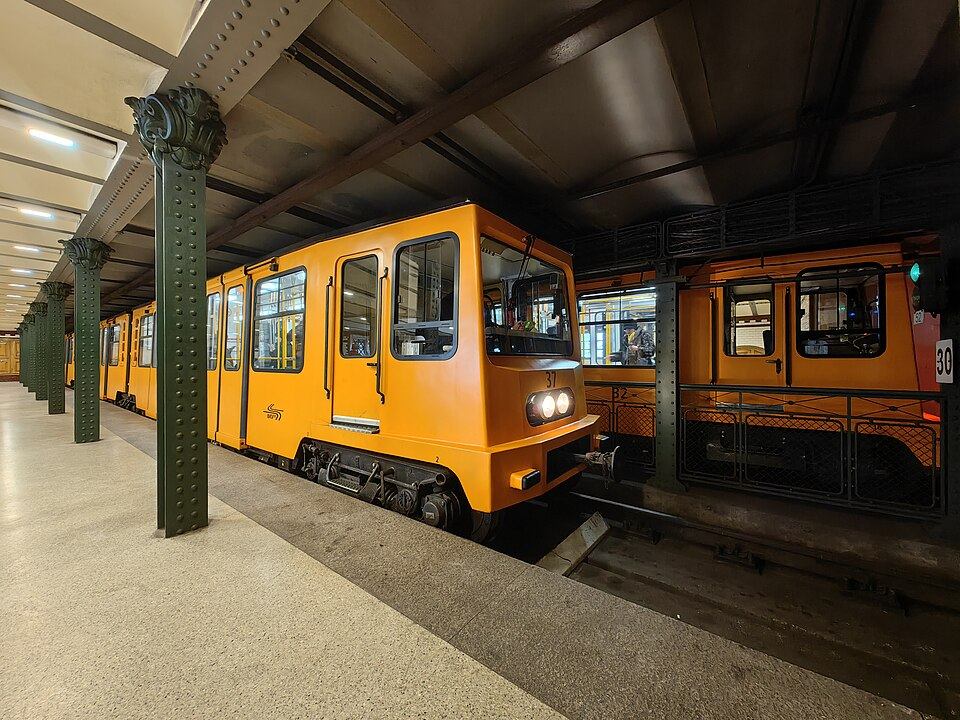
Photo: Random photos 1989 via Wikimedia Commons, CC BY-SA 4.0

At a Glance
- Budapest's public transit network is run by BKK and includes metro, tram, bus, and trolleybus lines.
- The BudapestGO app is the main modern tool for buying and validating tickets.
- Single tickets must be validated before or at the start of every ride, including transfers in some cases.
- Travel passes (24-hour, 72-hour, weekly) can save money for multi-day sightseeing.
- Line 1 of the metro is a historic line worth riding partly for its own sake.
- Random ticket inspections happen regularly, and fare evasion carries an on-the-spot fine.
In this guide
Budapest's public transportation network is dense, fast, and genuinely one of the more efficient systems you'll use in Europe, which is exactly why it's worth understanding before you arrive rather than figuring it out at a station turnstile. The whole system, including metro, trams, buses, and trolleybuses, is operated by BKK, the Budapest Transport Center, and almost everything a visitor needs can be handled through one app. This guide walks through the pieces: the lines themselves, how tickets and passes work, and the habits that will keep you out of trouble with ticket inspectors.
The Metro, Tram, and Bus Network at a Glance
Budapest has four metro lines, numbered M1 through M4, each identified by a color. M1, the yellow line, is Europe's oldest electrified underground railway and runs beneath Andrassy Avenue in shallow, tiled stations that feel distinctly different from the deeper, more modern M2, M3, and M4 lines. Trams supplement the metro heavily, and the 4 and 6 lines in particular form a busy ring around the inner city that many visitors end up using daily. Buses and trolleybuses fill in routes the rail-based network doesn't cover, including some connections up into the Buda hills. If you're trying to decide between neighborhoods based on how easily you can get around, it's worth cross-referencing this network with our guide to where to stay in Budapest. If you're coming straight from the airport, our guide to getting from Budapest Airport to the city center covers the dedicated shuttle and transfer options that connect into this same network.
How Tickets Work
The core unit of Budapest public transit is the single ticket, which covers one continuous ride on one line without changing vehicles (with some specific transfer allowances on certain combinations). Tickets must be validated, either by a conductor-style stamping machine on board older vehicles or electronically through the BudapestGO app, at the start of your journey. An unvalidated ticket is treated the same as having no ticket at all if you're checked. Paper tickets can be bought from machines at metro stations and some street kiosks, but the BudapestGO app has become the simplest way for visitors to buy, store, and validate tickets from a phone, and it's worth setting up before your first ride rather than during it.
Single Tickets vs. Transfer Tickets
BKK sells a few ticket variants beyond the basic single fare, including options that allow one transfer within a limited time window. If your route requires changing from a bus to a tram, for example, a transfer-inclusive ticket can be cheaper than buying two separate single tickets. The exact current lineup of ticket types and their prices changes periodically, so always check the official BKK site or the app for what's currently offered rather than relying on a list from an older source.
Travel Passes for Multi-Day Visits
For most visitors spending several days in the city and riding transit more than a couple of times a day, a time-based pass, commonly available in 24-hour, 72-hour, and 7-day versions, works out to better value than buying individual tickets and removes the need to validate before every single ride. These passes cover unlimited rides on the standard network within their time window. If your itinerary includes a lot of back-and-forth between neighborhoods, a pass purchased on arrival can pay for itself within the first day or two. Compare this against your planned three-day itinerary or similar plan to see whether a multi-day pass makes sense for your trip.
Using the BudapestGO App
BudapestGO, BKK's official app, consolidates route planning, real-time arrival information, and ticket purchasing into one place. Once downloaded and set up with a payment method, it lets you buy a ticket moments before boarding and activates it digitally, removing the need to find a working ticket machine. It also shows live disruptions and schedule changes, which is useful since construction or maintenance occasionally affects specific lines or stations.
Ticket Inspections and Fines
Plainclothes and uniformed ticket inspectors check fares regularly across the network, including inside metro stations and on board trams and buses. If you're found without a valid, validated ticket or pass, you'll be asked to pay an on-the-spot fine that is notably higher than the cost of the ticket itself, and inspectors generally do not accept excuses about not understanding the system. Keep your ticket or pass accessible, and confirm it actually validated (the app or machine should give a clear confirmation) rather than assuming a purchase alone is sufficient.
Comparing Transit Options
| Option | Best For | Key Consideration |
|---|---|---|
| Single ticket | Occasional, one-off rides | Must validate before boarding |
| Transfer ticket | Trips requiring one change | Only valid within a set time window |
| 24/72-hour or weekly pass | Frequent multi-day sightseeing | No per-ride validation needed |
| BudapestGO app | Most visitors | Combines planning, tickets, and live updates |
A Few System Habits Worth Knowing
- Doors on trams and buses often don't open automatically; look for a door button to press when you want to exit or board.
- Metro trains and most trams run frequently during the day but less often late at night, so check the app for current schedules if you're out past midnight.
- Standing on the left side of metro escalators is considered rude if you're not actively walking up; keep right unless passing.
- Some older trams and buses only have steps at the entrance, which matters if you're traveling with a stroller, heavy luggage, or a mobility device; see our dedicated guide on accessibility and reduced mobility for more on this.
Combining Transit With Walking
Much of central Budapest is genuinely walkable, and locals often treat transit as a tool for crossing the river or covering longer distances rather than for every single trip. Pairing transit with walking, detailed further in our guide to walking and cycling in Budapest, tends to produce the most enjoyable sightseeing rhythm, since you see more of the city at street level between rides.
Common Mistakes to Avoid
- Buying a ticket but forgetting to validate it, which is treated the same as having no ticket during an inspection.
- Not realizing that a single ticket generally doesn't cover a transfer to a different line without a specific transfer ticket type.
- Assuming every tram or bus door opens automatically; many require pressing a button to open.
- Relying only on cash when ticket machines or the app may require a card or mobile payment for certain purchases.
- Riding late at night without checking reduced night schedules, leading to long waits at a stop.
Frequently Asked Questions
Do I need to buy tickets separately for the metro, tram, and bus?
No, BKK operates one unified ticketing system across metro, tram, bus, and trolleybus lines, so the same ticket types and passes work across all of them.
Can I use a contactless credit card to pay on board?
Payment options vary by vehicle and station, and contactless or app-based payment has expanded over time, so check the official BKK site or BudapestGO app for current accepted methods before relying on tapping a card.
Is the BudapestGO app available in English?
Yes, the app is designed to work for international visitors and offers an English-language interface.
How late does the metro run?
Metro lines generally run from early morning into the night with reduced frequency late in the evening; check the official BKK schedules for current exact hours on each line.
What happens if an inspector stops me without a valid ticket?
You'll be asked to pay an on-the-spot fine that is higher than a standard ticket price. Inspectors carry identification and the process is routine, but it's an avoidable expense if you validate every ride.
Are there night buses after the metro closes?
Yes, BKK operates a network of night bus lines that cover many of the same corridors as the metro once it closes, though frequency is lower.