Budapest Itineraries
Two Days in Budapest: Buda, Pest and the Danube
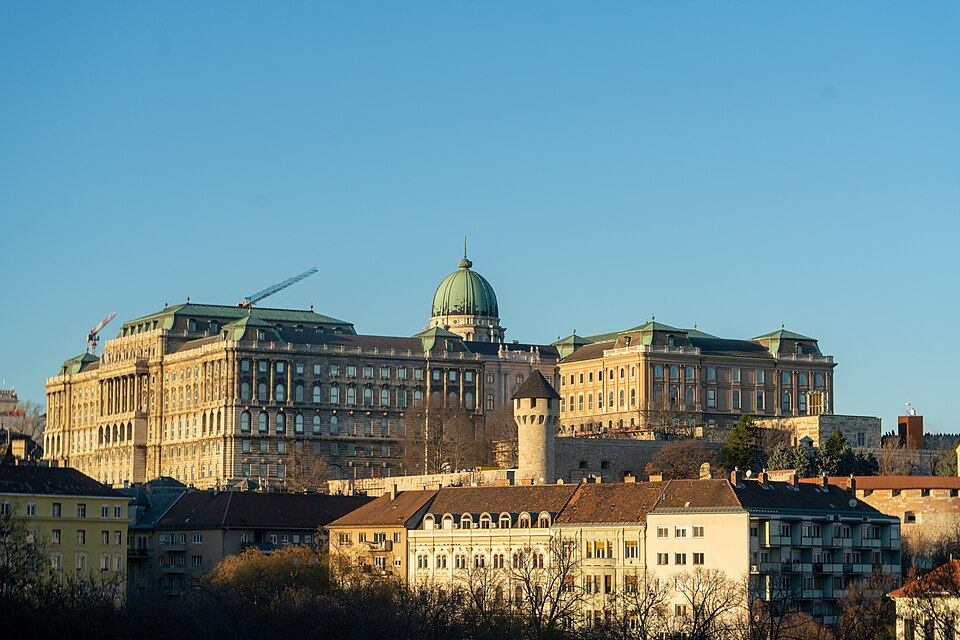
Photo: Paul Colin Hennig (firstdorsal.eu) via Wikimedia Commons, CC BY-SA 4.0
_from_across_the_Danube,_Budapest_(2025).jpg)
At a Glance
- Give each day a geographic anchor: Buda on day one, Pest on day two, instead of zig-zagging across the river repeatedly.
- A thermal bath fits comfortably into a two-day trip, but only once, on the evening you have the least walking planned.
- Andrassy Avenue connects central Pest to Heroes' Square and City Park almost in a straight line, so use it as your afternoon spine on day two.
- The Jewish Quarter works best as the closing stop of the evening rather than a midday detour, since it's livelier after dark.
- Build in one buffer block each day; Budapest's landmarks all take longer in person than their descriptions suggest.
In this guide
- How to Split Two Days Between Buda and Pest
- Day 1 at a Glance: Castle Hill and the Buda Riverbank
- Day 1 Morning and Afternoon: Castle Hill to Gellert Hill
- Day 1 Evening: A Thermal Bath on the Buda Side
- Day 2 at a Glance: Pest Landmarks, City Park and the Jewish Quarter
- Day 2 Morning and Afternoon: Parliament to Szechenyi Baths
- Day 2 Evening: The Jewish Quarter
- If It Rains on Either Day
Two days gives you enough time to treat Buda and Pest as two distinct days rather than a single rushed loop. The structure below puts the hills, the castle, and one thermal bath on day one, then saves the flatter landmark cluster, City Park, and the Jewish Quarter for day two. It's a deliberate split: day one is more physically demanding, with stairs and hills, so day two is built to be easier on your legs after a full day of walking.
How to Split Two Days Between Buda and Pest
The simplest way to avoid wasted transit time is to commit each day to one side of the Danube and only cross once, in the evening, if at all. If you're still deciding between the two for where to actually stay, this comparison of Buda and Pest covers the practical differences in walkability and nightlife that matter for a short trip. The itinerary below assumes a hotel somewhere central enough to reach both sides within twenty or thirty minutes, since Budapest's public transit network makes that realistic from most of the inner districts. This plan assumes you're giving Budapest a proper two-day stay rather than squeezing it into a single rushed day; if your trip really is down to one day, the one-day itinerary strips this same route down to its essentials.
Day 1 at a Glance: Castle Hill and the Buda Riverbank
| Time | Stops |
|---|---|
| Morning, 9:00–12:00 | Buda Castle terraces, Fisherman's Bastion, Matthias Church, Ruszwurm Confectionery |
| Midday, 12:00–13:00 | Walk down toward Gellert Hill, lunch en route |
| Afternoon, 13:00–15:30 | Gellert Hill and the Citadella, down to Liberty Bridge, Great Market Hall |
| Evening, 17:00–19:30 | Rudas or Gellert Thermal Bath, dinner nearby |
Day 1 Morning and Afternoon: Castle Hill to Gellert Hill
Start on Castle Hill while the morning light is best and the terraces are still relatively calm. Buda Castle anchors the hilltop; walk its courtyards and, if a museum appeals to you, set aside time for the Hungarian National Gallery inside the complex. Fisherman's Bastion and Matthias Church sit a few minutes away and are worth 45 minutes each, and Ruszwurm Confectionery is a sensible place to sit down with a pastry before heading back downhill. From Castle Hill, work your way south toward Gellert Hill rather than crossing back to Pest. The climb up to the Citadella and the Liberty Statue is a sustained uphill walk, but it rewards you with one of the widest views over both riverbanks. Coming back down, Liberty Bridge leads directly to the Great Market Hall, where the upstairs gallery of casual eateries makes an easy late lunch before the day's final stretch.
Day 1 Evening: A Thermal Bath on the Buda Side
End the day at Rudas or Gellert Thermal Bath, both within easy walking distance of where the afternoon left off. Rudas has a historic, domed Ottoman-era pool and runs on a mix of single-sex and mixed-bathing sessions depending on the day and hour, while Gellert leans into Art Nouveau tiling and architecture as much as the bathing itself. Either works as a way to rest sore legs after a day with two hills in it. Confirm current session times and admission directly on the bath's own information before you go, since schedules shift by day of the week.
Day 2 at a Glance: Pest Landmarks, City Park and the Jewish Quarter
| Time | Stops |
|---|---|
| Morning, 9:00–12:00 | Hungarian Parliament Building, Liberty Square, St. Stephen's Basilica |
| Midday, 12:00–13:00 | Lunch in District V, Danube Promenade walk |
| Afternoon, 13:00–17:00 | Andrassy Avenue to Heroes' Square, Szechenyi Thermal Bath |
| Evening, 19:00–22:00 | Karavan Street Food, Szimpla Kert in the Jewish Quarter |
Day 2 Morning and Afternoon: Parliament to Szechenyi Baths
Begin at the Hungarian Parliament Building, ideally with an interior tour booked well in advance; without one, the view from Kossuth Square and Liberty Square still makes a strong morning anchor. Walk the Danube Promenade toward St. Stephen's Basilica, stopping at the Shoes on the Danube Memorial along the way, and spend about an hour inside the Basilica before lunch somewhere nearby in District V. In the afternoon, walk Andrassy Avenue out toward Heroes' Square — it's a long, straight boulevard lined with 19th-century townhouses, and the walk itself is part of the appeal, though you can shorten it by hopping on the M1 metro that runs underneath it for any stretch. By the time you reach City Park, head straight into Szechenyi Thermal Bath, Budapest's largest and most recognizable bath complex, and treat the rest of the afternoon as pool time rather than more walking.
Day 2 Evening: The Jewish Quarter
After the baths, head into the Jewish Quarter for dinner and a lower-key evening. Karavan Street Food Court, a cluster of food trucks sharing an outdoor courtyard, is an easy and casual dinner option, and it sits directly beside Szimpla Kert, the best known of Budapest's ruin bars. Szimpla is worth wandering even if you don't plan to drink much — it's built inside a crumbling pre-war building filled with mismatched furniture and salvaged decor across several rooms and a courtyard, and it's noticeably calmer earlier in the evening than after midnight.
If It Rains on Either Day
On a rainy day-one, trade time on Gellert Hill's exposed overlook for the Hungarian National Gallery or the Hospital in the Rock tour inside Castle Hill, both fully indoors. On a rainy day-two, the Basilica, Szechenyi's indoor pools, and the Jewish Quarter's bars and cafes all hold up fine in bad weather, so the only real loss is the open-air walk down Andrassy Avenue, which you can simply shorten by metro. If you'd rather not gamble on weather at all, building a third day into the trip gives you room to shuffle outdoor and indoor stops as needed; the three-day itinerary spreads this same plan out with more breathing room.
Common Mistakes to Avoid
- Splitting Castle Hill and Gellert Hill across two different days. Both sit on the Buda side and are far more efficient to cover back to back on the same day, as above.
- Scheduling a thermal bath visit in the morning before a full day of walking. A bath works better as a closing activity once your legs are already tired.
- Walking the entire length of Andrassy Avenue in midsummer heat without a metro shortcut in mind. The M1 line runs the full length underneath it.
- Arriving at Szimpla Kert very late expecting a quiet look around. It's at its calmest in the early evening and considerably busier after 11 p.m.
- Not checking which bath session is running that day at Rudas, since single-sex and mixed-bathing hours vary by day of the week.
Frequently Asked Questions
Is two days enough to see Budapest properly?
Two days covers the major landmarks on both sides of the river plus one thermal bath, which satisfies most first-time visitors. It still leaves out a day trip and deeper museum time, so treat it as a solid introduction rather than a complete visit.
Should I visit a bath on both days?
One bath visit is plenty for a two-day trip, since each one realistically takes two to three hours once you include changing and relaxing. Pick the bath that fits the day's geography best rather than trying to fit in both Buda and Pest baths.
Do I need a multi-day transit pass for two days?
It depends on how much you walk versus ride. If you're covering the itinerary above mostly on foot with occasional tram or metro hops, a short-term pass from BKK is usually more convenient than buying individual tickets each time.
Can I do the Jewish Quarter earlier in the day instead of the evening?
You can, and the Dohany Street Synagogue in particular is better visited during the day since it closes in the evening. The ruin bars and food stalls, though, are genuinely livelier after dark, so the evening slot above suits most visitors better.
What's the best order if I only have one full day of good weather?
Put the hillier, view-dependent day — day one above — on the clearer day, and save the Basilica, baths, and Jewish Quarter for whichever day turns out rainier, since most of day two holds up fine indoors.