Landmarks & History
Fisherman's Bastion and Matthias Church: Visitor Guide
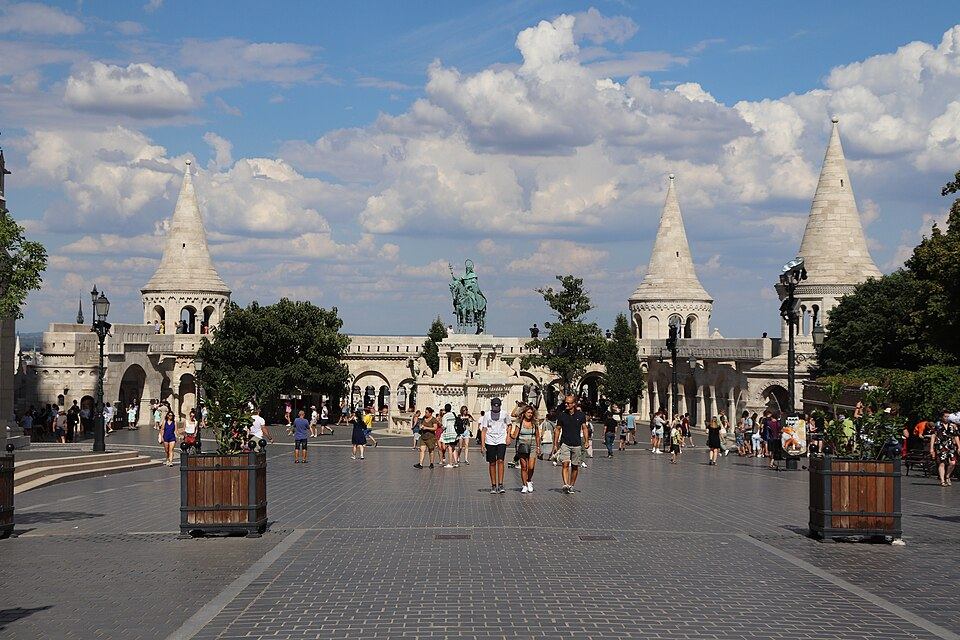
Photo: Andrzej Otrebski via Wikimedia Commons, CC BY-SA 4.0

At a Glance
- Fisherman's Bastion and Matthias Church are two separate landmarks that happen to sit side by side on Castle Hill.
- Much of the Bastion's lower terrace is free to walk; some upper sections can require a separate ticket.
- Matthias Church is named for a medieval king but has hosted coronations centuries apart, including the last ones in Hungary's history.
- The colorful roof is made of glazed ceramic tile, not paint — a detail easy to miss from photos alone.
- Mid-morning to early afternoon is when tour buses cluster here; earlier or later is noticeably calmer.
- Both sites sit a short, mostly flat walk from Buda Castle at the hill's southern end.
In this guide
- Two Landmarks, One Small Square
- Where the Bastion's Unusual Name Comes From
- What's Free to See, and What Requires a Ticket
- Matthias Church: Roof Tiles, Coronations and What's Inside
- Best Times to Avoid the Crowds
- Lookout Terraces and the View Across the River
- Fitting This Stop Into a Longer Castle Hill Day
Fisherman's Bastion and Matthias Church sit right next to each other at the northern end of Castle Hill, and most visitors see both in the same short stop. That's reasonable, but it blurs what's actually what — one is a decorative viewing terrace built long after the medieval period it evokes, the other is a working church with a genuinely long history. This guide separates the two, explains what costs money and what doesn't, and covers how to time the visit around the crowds that build up here by mid-morning.
Two Landmarks, One Small Square
Both sites face the same small square at the hill's northern edge, a short, mostly flat walk from Buda Castle along the ramparts to the south. If you're approaching from elsewhere in the neighborhood, this site's Castle District guide covers how the square fits into the wider hilltop layout, including nearby streets worth a slower wander once you're done here.
Where the Bastion's Unusual Name Comes From
The name refers to the fishermen's guild, which was historically responsible for defending this stretch of the city's medieval walls. The structure you actually see today, though, is not that medieval fortification — it's a decorative viewing terrace built in a neo-Romanesque and neo-Gothic style in the early 1900s, designed specifically to complement the church beside it and to give the hill a dramatic lookout point. Its seven conical turrets are generally said to represent the seven Magyar tribes that settled the Carpathian Basin.
What's Free to See, and What Requires a Ticket
The lower terrace and the walkway along the wall are generally open to walk without charge, which is enough for most of the postcard views toward Pest. Some of the upper tower sections and a more enclosed terrace area can require a separate paid ticket to access, and that structure changes from time to time, so check current signage or the official tourism information before assuming either way.
- Generally free: the main lower terrace, the walkway along the bastion wall, views toward the Danube and Parliament
- Sometimes ticketed: certain upper towers and enclosed lookout sections
- Always worth checking on arrival: current ticket booths and posted rules, since these shift seasonally
Matthias Church: Roof Tiles, Coronations and What's Inside
Matthias Church is formally the Church of Our Lady, though it's universally known by the nickname tied to King Matthias Corvinus, who used it for royal ceremonies and reportedly funded part of its tower. Its most photographed feature is the roof, covered in patterned, glazed ceramic tile rather than paint, which gives it a distinctive diamond-patterned shimmer in direct sun. Inside, restored 19th-century frescoes and gilded detail cover nearly every surface. The church has hosted royal coronations across different centuries, including the last two held in Hungary, and it was repurposed for a period during the Ottoman occupation of Buda. Entry to the interior typically requires a modest ticket, separate from anything charged at the Bastion next door.
Best Times to Avoid the Crowds
Tour buses and river-cruise day groups cluster around this square from mid-morning through early afternoon, which is also when the light is flattest for photos of the tiled roof. Arriving close to opening, or in the hour or so before the area quiets down in late afternoon, makes a noticeable difference, both for crowd levels and for how the low sun catches the tiles and spires.
Lookout Terraces and the View Across the River
The main draw for many visitors isn't the architecture at all — it's the view. From the terrace, you're looking almost directly across the Danube at the Pest skyline, with the Hungarian Parliament Building clearly visible downriver. It's one of the more reliable spots in the city for a wide shot that includes both the river and a major landmark in the same frame, and it works just as well at dusk as it does in daylight.
Fitting This Stop Into a Longer Castle Hill Day
On their own, the Bastion and the church rarely need more than an hour or two, including a coffee break at one of the cafés nearby. Most travelers combine the stop with the rest of Castle Hill, working it into a loop that also takes in Buda Castle's courtyards. If this is your only full day in the city, this site's one-day Budapest itinerary shows where this square fits into a realistic single-day route.
Common Mistakes to Avoid
- Assuming the Bastion is a surviving medieval structure — the version standing today is a much later, decorative building, not the original defensive wall.
- Not realizing the church and the Bastion charge separately, then being surprised at a second ticket booth after already paying once.
- Showing up at the peak mid-morning tour-bus window and fighting for railing space that's nearly empty an hour earlier or later.
- Photographing only from directly in front of the church and missing the river view, which is arguably the stronger shot from the terrace itself.
- Skipping the church interior because the exterior roof gets all the attention online — the frescoed interior is a different experience entirely.
Frequently Asked Questions
Are Fisherman's Bastion and Matthias Church the same ticket?
No. They're separate sites with separate admission structures. Much of the Bastion's main terrace is free to walk, while the church interior and some upper Bastion sections typically require their own tickets.
Is Fisherman's Bastion actually a medieval fortification?
Not in its current form. The name comes from the medieval fishermen's guild that once defended this stretch of wall, but the ornamental structure visitors see today was built in the early 1900s as a viewing terrace.
Why is the church roof so colorful?
The roof is covered in glazed ceramic tile rather than paint, which is why the pattern holds its color and catches light the way it does, especially in direct sun.
What's the best time of day to visit?
Early morning or later in the afternoon, outside the mid-morning-to-early-afternoon window when tour groups and cruise-day visitors cluster around the square.
Can I see the Danube and Parliament from here?
Yes. The terrace looks almost directly across the river toward Pest, and the Parliament building is clearly visible downriver from several points along the wall.