Culture & Nightlife
Classical Music and Opera in Budapest
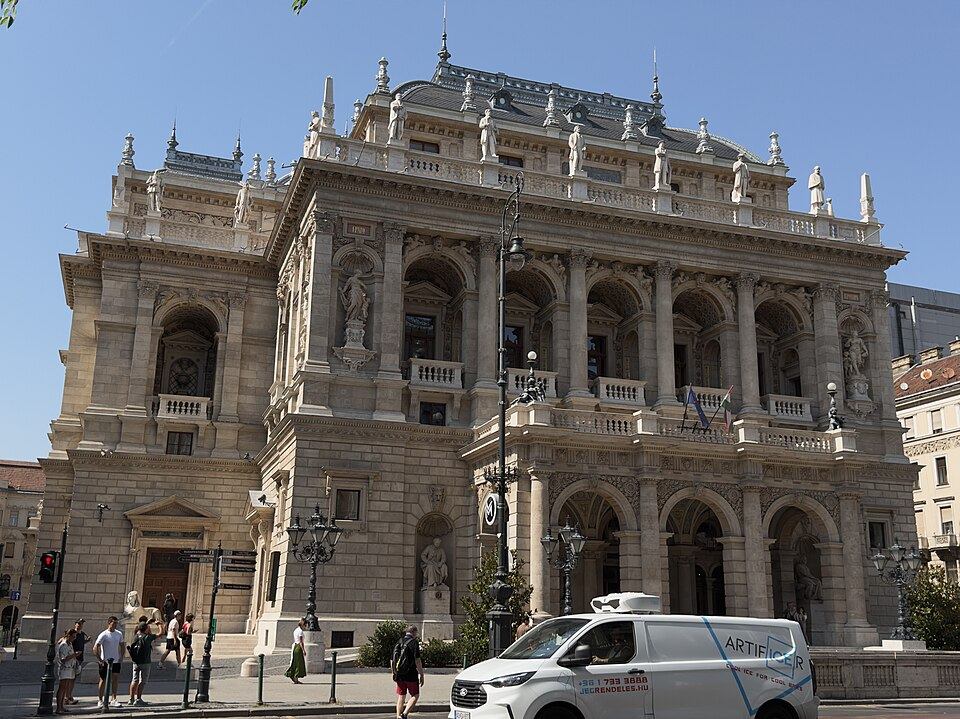
Photo: Mike is Michi via Wikimedia Commons, CC BY-SA 4.0

At a Glance
- The Hungarian State Opera House is the city's flagship venue, known as much for its interior as for its performance calendar.
- Several other venues, including a dedicated concert hall and a historic music academy, run full classical programs alongside the opera house.
- Dress codes are rarely strict outside of gala nights, though many visitors still dress a notch above casual out of respect for the setting.
- Seat location changes the experience more than at most performances, since sightlines and acoustics vary noticeably by section.
- Performance calendars are seasonal, with a lighter schedule in summer, so check the calendar before building an evening around a specific show.
In this guide
Budapest's classical music scene runs deeper than a single famous building, though that building is where most visitors start. The city has a long history as a serious music capital, home to composers and performers whose names are still attached to its concert halls and academies, and that history is still active rather than preserved behind glass. It's also closely tied to the city's other cultural traditions; the same grand 19th-century spirit that produced the opera house also shaped the historic coffeehouse culture where musicians and composers once gathered between rehearsals. This guide covers the main venues, how opera and classical concerts differ as experiences, what to expect in terms of dress and etiquette, and how to approach booking.
The Hungarian State Opera House: What to Know Before You Go
The Hungarian State Opera House, opened in the late 19th century, is as much an architectural destination as a performance venue, with a gilded interior and a ceiling fresco that draw their own daytime visitors on guided tours separate from evening performances. Its resident companies stage both opera and ballet across a season that typically runs from early fall through late spring, with a reduced schedule in summer. Because the building itself is part of the draw, arriving early to spend time in the lobby and main hall before a show is worth building into your evening rather than rushing in right at curtain time. Current repertoire, casting and ticket availability are best confirmed directly through the Hungarian State Opera's official site, since the schedule changes with each season.
Other Venues for Classical Music Worth Knowing
The opera house isn't the only serious classical venue in the city. A dedicated concert hall built specifically for acoustics hosts the national philharmonic and touring orchestras, and a historic music academy associated with Hungary's most famous composer runs both student and professional concerts in a smaller, more intimate hall. Several of the city's churches, including venues near District V in central Budapest, also host organ recitals and chamber concerts, often at a more accessible price point than a full opera production. If your trip includes a visit to one of the city's grand churches, it's worth checking whether a concert is scheduled during your stay rather than treating the building purely as a daytime sight. Many visitors pair an evening concert with an afternoon spent deciding among the city's cultural institutions, which the guide to choosing the right Budapest museums covers in more detail, since the same part of town tends to hold both kinds of venue.
Opera, Ballet or Concert: What's Actually on Offer
Opera performances combine singing, orchestra and staged drama, typically running two to three hours including an intermission, and are usually sung in their original language with supertitles rather than translated into English. Ballet performances at the same venue swap the vocal element for choreography set to the same scale of live orchestral accompaniment. A standard orchestral concert, by contrast, is usually shorter, seated continuously through, and focused purely on the music without staging or costumes. If you're new to any of these formats, a single orchestral concert is the lowest-commitment way to experience a Budapest venue before committing an evening to a full opera, and it slots easily into a packed schedule like the one described in the one-day itinerary guide if evenings are tight.
Dress Code and Concert Etiquette
Formal dress codes are largely a thing of the past outside of gala premieres and special events, and you'll see a real mix in the audience, from suits to smart-casual outfits. That said, jeans and sneakers stand out more here than at a casual restaurant, and many visitors choose to dress a notch above their daytime travel clothes out of respect for the setting rather than any enforced rule. Arrive with enough time to find your seat before the house lights dim, since latecomers are often held at the door until a natural pause in the program, and phones should be fully silenced rather than just set to vibrate.
Comparing the Main Venues
| Venue Type | What It's Known For | Good Fit For |
|---|---|---|
| Hungarian State Opera House | Opera and ballet, gilded 19th-century interior | A full evening combining architecture and performance |
| Dedicated concert hall | Orchestral concerts, built for acoustics | A focused listening experience without staging |
| Historic music academy | Smaller-scale and student performances | An intimate, lower-cost introduction to live classical music |
| Church concerts | Organ and chamber music in historic sanctuaries | A shorter, often more affordable evening |
How Seat Choice Changes the Experience
At the opera house in particular, sightlines vary significantly by section; some side boxes offer atmosphere and proximity but a partially obstructed view of the stage, while upper-level seats trade some visual detail for a fuller sense of the room and often better acoustics. If seeing the stage clearly matters more to you than soaking in the architecture, prioritize central seating over a box, even if the box looks more appealing in photos. Acoustic quality in a concert hall built for orchestral music tends to be more consistent across sections than in a converted or older multipurpose space.
Booking Tips and Season Timing
The performance season runs lighter in summer, with some venues pausing their main programming for part of the season, so a trip planned for July or August may have fewer options than one planned for fall, winter or spring. Popular productions and name performers can sell out well ahead of the date, while a typical weeknight orchestral concert often has tickets available much closer to the performance. Booking directly through a venue's own official channel is the most reliable way to confirm current dates, pricing tiers and seat availability rather than relying on secondary resellers.
Common Mistakes to Avoid
- Assuming the opera house is the only serious classical venue and missing a concert hall or music academy performance that might suit your schedule better.
- Booking a side box seat for the view of the room, then being surprised by a partially blocked view of the stage.
- Showing up in very casual clothing and feeling out of place, or overdressing for what turns out to be a relaxed weeknight concert.
- Not checking the summer schedule and assuming a full season of options will be running during a July or August visit.
- Arriving right at curtain time and missing the chance to see the venue's interior before the show starts.
Frequently Asked Questions
Do I need to speak Hungarian to enjoy an opera performance in Budapest?
No. Performances are typically sung in their original language, which is often Italian, German or French rather than Hungarian, and supertitles are commonly provided so the plot is easy to follow regardless of your language background.
Is there a strict dress code for the opera house?
Not for most regular performances. Smart-casual is common and comfortable, though very casual clothing like shorts or flip-flops stands out. Gala premieres and special events sometimes warrant dressing up more.
How far in advance should I book opera tickets?
Popular productions or well-known performers can sell out weeks ahead, while a standard weeknight show often has tickets available closer to the date. If a specific date or production matters to you, book as early as you can directly through the venue.
Can I just tour the opera house without seeing a performance?
Many venues offer daytime guided tours of the building separate from evening performances, which is a good option if you want to see the interior but can't fit a full show into your schedule. Check the venue's own site for current tour availability.
What's the difference between going to the opera house and a concert hall?
The opera house stages opera and ballet with full sets, costumes and staged drama. A dedicated concert hall is built for orchestral and chamber music without staging, generally offering a more focused listening experience in a space designed specifically for acoustics.