Day Trips & Seasons
Budapest in Summer: Heat, Crowds and Outdoor Plans
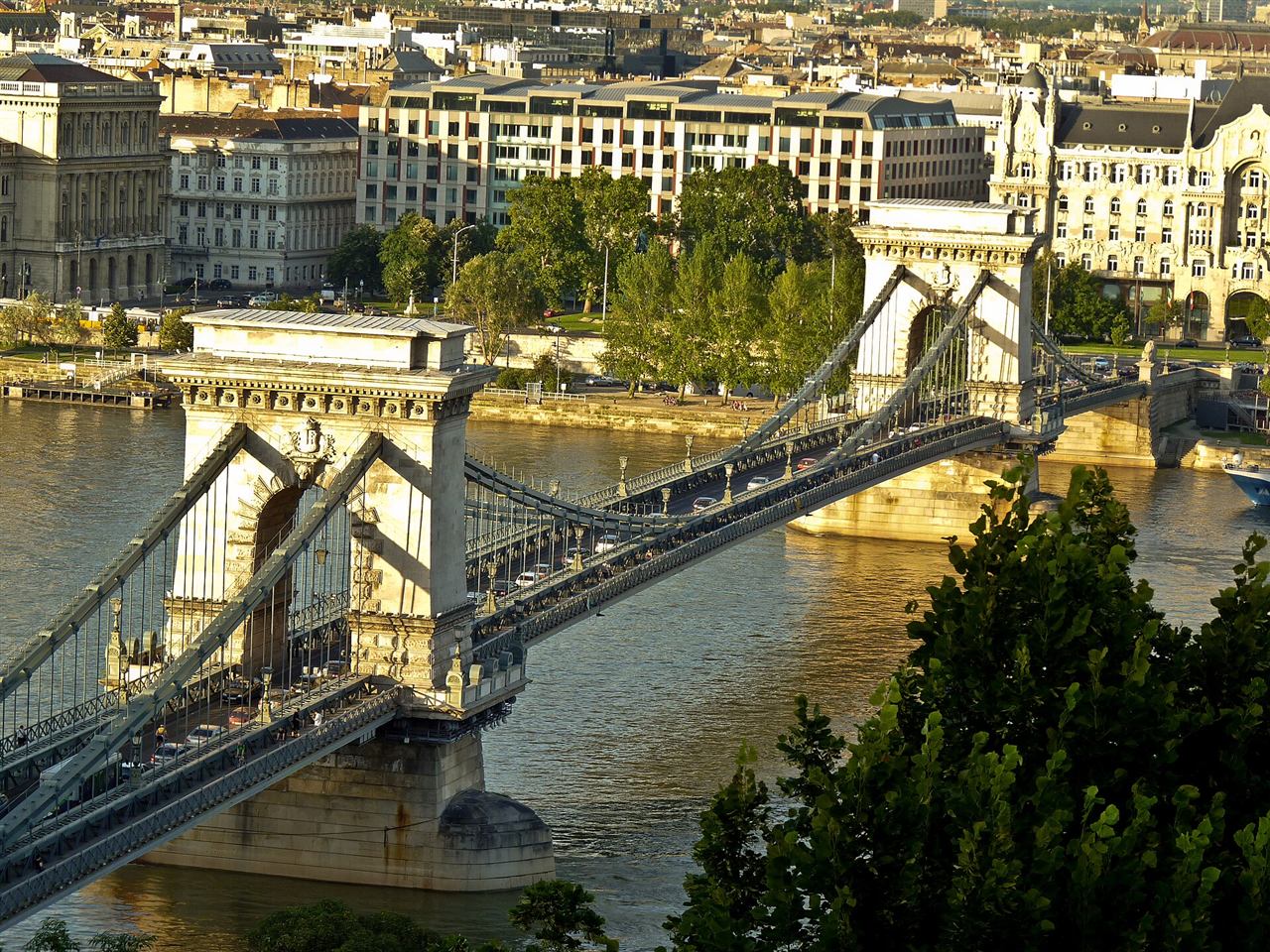
Photo: Mohammad Hossein Tajvidi via Wikimedia Commons, Public Domain

At a Glance
- July and August are Budapest's hottest, busiest and most expensive months to visit.
- Midday heat is the main obstacle to comfortable sightseeing; mornings and evenings work better.
- Air conditioning isn't universal in older buildings, so don't assume every indoor stop offers full relief.
- Szechenyi Bath's outdoor pools double as both a sight and genuine heat relief, with proper sun protection.
- Evening Danube cruises around sunset are one of the best warm-weather activities in the city.
- Lake Balaton is at its seasonal best in summer, making it the natural escape from a stretch of city heat.
In this guide
- How Hot Budapest Summers Actually Get
- Managing Crowds During Peak Season
- Why Evenings Are Budapest's Best Summer Sightseeing Window
- Cooling Off: Baths, River Access and Shade
- Danube Cruises and Other Warm-Weather Activities
- Packing for Budapest Summer Heat
- When a Lake Balaton Escape Makes Sense
- A Hot-Day Schedule, Hour by Hour
- Escaping the Heat Without Leaving the City
- Summer Events and Date-Sensitive Planning
Summer is Budapest's busiest and hottest season, running roughly June through August, when long daylight hours and a full calendar of outdoor festivals collide with crowds at every major landmark and genuinely uncomfortable midday heat. Visitors who plan around the heat rather than against it tend to get more out of a summer trip than those who try to sightsee on a normal daytime schedule.
How Hot Budapest Summers Actually Get
July and August are reliably the hottest stretch, with afternoon temperatures that regularly climb into a range many visitors would call hot rather than merely warm, and humidity that makes the heat feel heavier in the city center than it does near the river or up in the hills. Air conditioning is not universal in older buildings, hotels, or even some restaurants, so do not assume every indoor space offers full relief the way it might at home.
Managing Crowds During Peak Season
Summer overlaps with peak season for nearly every major Budapest attraction, from Buda Castle to the thermal baths, which means longer lines, fuller trams, and a city center that feels noticeably more crowded than it does in spring or fall. Booking entry to major sights in advance where that option exists, and starting your day earlier than you would in a quieter season, both help offset the crowd factor. Travelers deciding whether summer suits them at all should compare it against the full year in the month-by-month guide to the best time to visit Budapest.
Why Evenings Are Budapest's Best Summer Sightseeing Window
Because the heat peaks in mid-afternoon, Budapest's summer rhythm rewards an early start and a slower midday followed by an active evening. Many of the best summer experiences — a Danube cruise at sunset, an evening at a ruin bar's open-air courtyard, or a walk across a bridge once the stone has cooled — happen after the day's heat has broken, and the long daylight hours mean it is still bright well into the evening.
Cooling Off: Baths, River Access and Shade
Szechenyi Bath's outdoor pools work as both a sightseeing stop and genuine relief from the heat, though midday sun at an uncovered pool deck is its own kind of exposure to manage with sunscreen and shade breaks. The Danube's riverside paths and the wooded parts of Margaret Island tend to run noticeably cooler than the dense stone streets of the city center, making them a reasonable midday retreat if you want to keep moving without the full force of the heat.
Danube Cruises and Other Warm-Weather Activities
A Danube river cruise is one of the defining summer activities, and the version worth prioritizing is typically an evening sailing timed around sunset, when the heat has eased and the riverside landmarks are lit. The guide to choosing a Danube river cruise breaks down the different cruise formats and how to pick between them. Outdoor festivals and open-air cultural events also cluster heavily in summer, adding to the city's energy but also to its crowds and noise in the areas where they take place.
Packing for Budapest Summer Heat
- Lightweight, breathable clothing rather than anything heavy, plus one layer for air-conditioned interiors that run cold
- A reusable water bottle, since staying hydrated matters more in Budapest's summer humidity than visitors expect
- Sunscreen and a hat for exposed areas like bath pool decks and open squares
- Comfortable walking shoes that breathe well, since summer sightseeing still involves plenty of walking
- A swimsuit, packed and ready, since a thermal bath or a Danube-adjacent pool day is one of the better heat-management strategies in the city
When a Lake Balaton Escape Makes Sense
If a stretch of summer heat starts to feel like too much city, Lake Balaton is the most natural outdoor escape, trading stone streets for open water and lake towns built around exactly the kind of relaxed, swim-focused day that is hard to replicate in central Budapest. The Budapest to Lake Balaton day trip guide covers whether a day trip is worth it or whether an overnight stay serves you better, which matters more in summer than in any other season since it is the one time of year Balaton is at its best.
A Hot-Day Schedule, Hour by Hour
July and August afternoons in Budapest can push well past 86°F (30°C) in a city of stone, asphalt and tram tracks, and the heat does not drain away until after dark. The practical answer is to treat the day as three separate shifts instead of one long walk.
| Block | Best use | Why it works |
|---|---|---|
| Early morning | Castle Hill, Fisherman's Bastion, the Buda embankment | The plazas are open and shaded by the buildings; the light on the Pest skyline is clear. |
| Midday to late afternoon | Museums, the Great Market Hall, a coffeehouse, or a bath | Indoor stone halls stay cooler than the street, and the market hall has high ceilings and shaded aisles. |
| Early evening | Margaret Island, a riverside walk, a Danube cruise | Air over the water is noticeably cooler, and the sun is lower by the time the Parliament lights come on. |
| Late evening | Dinner on a terrace, wine bars, ruin bars | Temperatures settle, and terraces fill up after sunset. |
Build the day backward from the hottest hours. If a museum or indoor market is the anchor for 1 p.m. to 4 p.m., the rest of the plan tends to fall into place on its own.
Escaping the Heat Without Leaving the City
Several options go beyond "find a shady bench." Margaret Island, reached by tram 4 or 6 across Margaret Bridge or by bus, is a car-free park with long tree-lined paths, a musical fountain, a Japanese garden and a rose garden; rental bikes and pedal carts are available at the main entrances. The Buda Hills offer a second route: take the Cogwheel Railway (line 60) from Városmajor up to Széchenyi-hegy and connect to the Children's Railway, or ride the János-hegy chairlift toward the Elizabeth Lookout Tower, a stone tower finished in 1910 and designed by Frigyes Schulek, the architect behind Fisherman's Bastion. Hilltop air is usually a few degrees milder than the Pest side.
Caves are another underused option. The Pál-völgy and Szemlő-hegy caves in the Buda Hills stay cool year-round, so they feel like air conditioning on a July afternoon; check the official visitor pages for current guided-entry arrangements, since access is by tour. Outdoor pools are the more familiar answer, and a cooler-water lap or leisure pool is a better summer choice than the hottest thermal basins. For more on the baths in summer, see the first-timer's bath guide.
Summer Events and Date-Sensitive Planning
August 20 is St. Stephen's Day, Hungary's founding-of-the-state holiday, and the evening fireworks over the Danube draw large crowds to both embankments. Expect closed streets near the river, packed bridges, and slower trams that evening, and arrive at your viewing spot well before dark. In August the large Sziget festival typically takes over Óbuda Island (Hajógyári-sziget), which fills hostels and lifts hotel demand across the city; confirm dates on the festival's own site before booking a room. Many Budapest residents leave the city in the second half of July and August, so some small restaurants and shops close for a week or two; a closed sign is normal and not a reason to cancel the plan, just check the day before.
Sleeping, Moving and Drinking Water in the Heat
Air conditioning matters more than a central address once temperatures climb. When booking, look for rooms with confirmed A/C and, if possible, windows that face an inner courtyard; street-facing rooms in old Pest buildings can be both warm and loud. On public transit, newer low-floor trams and the M4 metro are generally better ventilated than older yellow trams, and the deep M2 and M3 platforms are cooler than the surface. Budapest tap water is drinkable, so a refillable bottle works fine; there are public drinking fountains in parks and at some squares, and cafés will generally top up a bottle if you are ordering something.
- Choose a room with A/C first and location second in July and August.
- Carry a hat, sunscreen and a bottle even for a short walk on Castle Hill, where there is little shade on the open terraces.
- Plan the Parliament tour or any open-air queue for the first slot of the day.
- If you are heat-sensitive, favor Pest's wide shaded boulevards over climbing the hill after noon.
For help matching a trip length to the season, the three-day itinerary is easy to flip into a summer version: mornings for open-air sights, afternoons for indoor stops.
Common Mistakes to Avoid
- Scheduling major outdoor sightseeing for the early afternoon, exactly when the day's heat peaks.
- Assuming every hotel, restaurant or shop has strong air conditioning, when many older buildings do not cool as aggressively as many visitors expect.
- Skipping sun protection at an outdoor thermal pool, where the combination of sun and water exposure adds up faster than it feels.
- Not booking ahead for popular summer attractions, then losing significant time to lines that barely exist in quieter seasons.
- Underestimating how much more crowded summer is than spring or fall at nearly every major landmark.
Frequently Asked Questions
How hot does Budapest get in summer?
July and August are the hottest months, with afternoon temperatures that regularly feel genuinely hot and humid, especially in the dense stone streets of the city center away from the river.
Is summer too crowded to visit Budapest?
It's the busiest season, with longer lines and fuller trams at major sights, but an early-start, late-evening rhythm and some advance booking make it manageable rather than overwhelming.
What's the best time of day to sightsee in summer?
Morning and evening. Midday heat is the biggest obstacle to a comfortable day, so many visitors shift major walking and sightseeing to the cooler bookends of the day.
Are the thermal baths good to visit in summer?
Yes, especially the outdoor pools, though midday sun exposure at an uncovered pool deck needs the same sun protection as any other outdoor activity.
Should I take a day trip to Lake Balaton in summer?
Summer is Balaton's best season by far, since the lake's appeal depends almost entirely on warm-weather swimming and lakeside dining that aren't available the rest of the year.
Is Budapest tap water safe to drink in summer?
Yes, tap water is generally considered safe to drink in Budapest, so a refillable bottle saves money and plastic. Some visitors prefer bottled or filtered water for taste, which is a personal choice, and you should always follow guidance from your own accommodation.
Where can I get out of the heat indoors on a hot afternoon?
The Great Market Hall, the large museums around Heroes' Square, the Buda Hills caves, and old coffeehouses all stay cooler than the street. A thermal bath with a cool lap pool also works, as long as you avoid the hottest basins in the peak heat.