Thermal Baths
Budapest Bath Etiquette and What to Pack
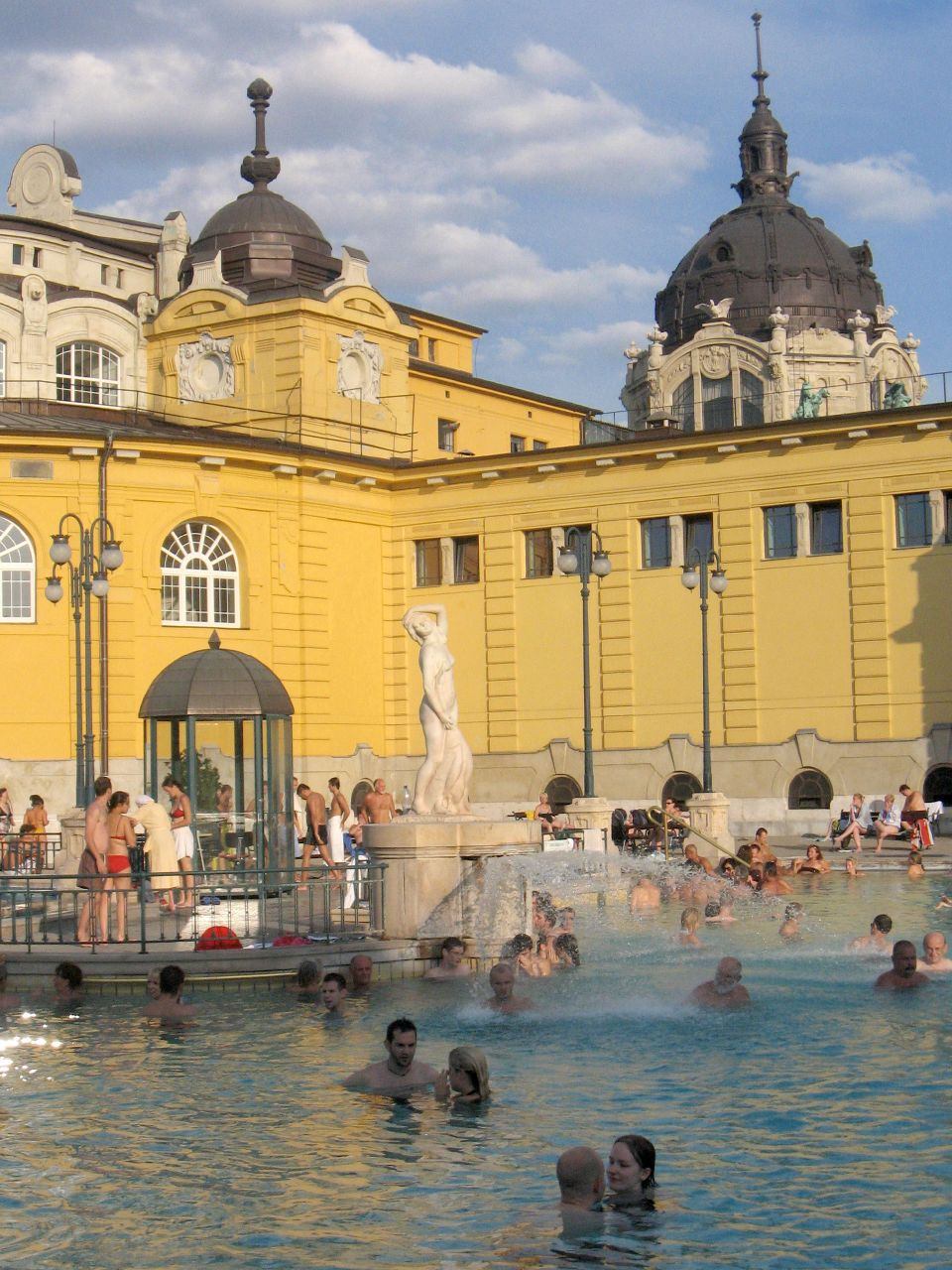
Photo: Guillaume Baviere via Wikimedia Commons, CC BY 2.0

At a Glance
- Some pools and saunas require a swim cap, and rules differ by bath, so it's safer to bring one than to assume you won't need it.
- You'll choose between a shared locker and a private changing cabin at check-in, which affects both privacy and cost tier.
- A pre-pool shower is expected at every bath, not an optional courtesy.
- Rubber sandals matter more than they sound — wet tile floors around the pools get slippery fast.
- Mixed-gender and single-sex rules vary by bath and sometimes by day, so check specifics for wherever you're headed.
- A reusable dry bag keeps wet swimsuits and towels from soaking through the rest of your belongings on the way home.
In this guide
- The Locker-Room System Explained
- Required and Recommended Gear: A Packing Checklist
- Swimsuit Rules and What Not to Wear
- Showering, Sauna and Steam Room Etiquette
- Mixed-Gender vs Single-Sex Sections
- Towels, Robes and Rental Equipment
- Photography and Phone Use Inside the Baths
- A Bath Visit in Order, From Turnstile to Exit
- What Changes From One Bath to the Next
- Small Habits That Prevent Common Problems
The actual swimming part of a Budapest bath visit is the easy part. What catches first-timers off guard is everything around it: the locker system, the swim-cap rules, the showering expectations, and the general unspoken etiquette that longtime regulars take for granted. This guide covers exactly what to bring and how to behave once you're inside, so your first visit runs smoothly instead of involving an awkward conversation with a staff member at the turnstile. It's meant as a companion to the broader overview of Budapest's thermal baths for first-time visitors, which covers how to choose a bath in the first place.
The Locker-Room System Explained
At check-in, you'll typically choose between a shared locker in a communal changing area or a private changing cabin, a small individual room where you can change without an audience. Private cabins usually cost somewhat more and tend to be worth it if you'd rather not change in a shared space, especially on a first visit when you're already managing enough unfamiliar logistics. Either option comes with a wristband or electronic chip that both locks your storage and, at some baths, tracks any extras you add once inside.
Required and Recommended Gear: A Packing Checklist
| Item | Why It Matters |
|---|---|
| Swimsuit | Standard swimwear is expected; cutoffs or street clothing generally aren't allowed in the pools. |
| Swim cap | Required in certain pools or sections at some baths — bring one so you're not caught without. |
| Rubber sandals or flip-flops | Wet tile around the pools gets slick, and bare feet on hot stone isn't comfortable either. |
| Towel | Rentable at most baths, but bringing your own avoids an extra line and extra cost. |
| Padlock | Some shared lockers use your own lock rather than a built-in one; check in advance if unsure. |
| Reusable dry bag | Keeps your wet suit and towel from soaking everything else on the way out. |
| Small amount of local currency or a card | For snacks, drinks or last-minute rentals once you're inside. |
Swimsuit Rules and What Not to Wear
Standard swimwear — the kind you'd wear at any public pool — is the expectation across every major Budapest bath. Cutoff shorts, athletic wear, or anything not designed as swimwear is typically turned away at some baths, so pack an actual swimsuit rather than improvising with gym clothes. Men should expect that swim trunks are generally accepted everywhere, despite the European stereotype of speedo-only pools; that rule is more associated with some competitive swimming facilities than with these tourist-frequented thermal baths.
Showering, Sauna and Steam Room Etiquette
Rinsing off before entering any pool is standard practice and, at most baths, actively enforced by staff rather than left to the honor system. Inside saunas and steam rooms, keep voices low, sit on a towel rather than directly on the wood benches, and don't linger if a session feels crowded — these are shared spaces with a real rhythm of their own, especially among regular visitors. If a sauna area is marked as textile-free, that's a different norm from the swimsuit-required pools, and it's worth reading posted signage carefully rather than guessing.
Mixed-Gender vs Single-Sex Sections
Policy varies meaningfully by bath. Larger, more modern complexes tend to run mixed throughout, while some of the older, Ottoman-rooted bathhouses have maintained single-sex sessions on certain days as a holdover from their original design. If this affects your plans, it's worth checking the specific guide for whichever bath you're visiting — the comparison of Gellert, Rudas and Lukacs flags where this comes up — and confirming the current schedule before you go, since it can change.
Towels, Robes and Rental Equipment
Most baths rent towels, robes and swim caps on site if you'd rather not pack your own, usually at an additional cost layered onto your base entry. Bringing your own towel is the one item most seasoned visitors recommend packing regardless, since it avoids both a line and a recurring rental cost, and a quick-dry travel towel takes up very little room in a daypack.
Photography and Phone Use Inside the Baths
Photography is generally tolerated in outdoor pool areas, especially at a bath like Szechenyi, where it's practically part of the culture. Indoors, and especially near changing rooms, saunas and private areas, be more conservative — other bathers are there to relax, not to appear in your vacation photos, and some sections explicitly restrict phone or camera use. When in doubt, keep the phone in your locker rather than finding out the hard way that an area is off-limits for photography.
A Bath Visit in Order, From Turnstile to Exit
Knowing the sequence removes most of the stress. The order below fits every major bath, with small differences in layout.
- Buy or show your ticket at the entrance and receive a wristband or chip. It opens your locker or cabin, so treat it like a room key.
- Follow the signs to the changing area. Cabins are labeled for the key number on your wristband, and shared locker rooms are often sorted by gender.
- Put on your swimsuit, take only a towel, sandals, and your cap into the pool area, and leave the phone and wallet locked away.
- Shower before entering any pool. At some baths, this is the stage where staff check that a cap is on.
- Start in a mild pool, not the hottest one. Let your body adjust for several minutes before moving to the warmest water.
- Alternate. A common local rhythm is a stretch in a hot pool, a short cooler dip or rest on a lounger, then another round, rather than soaking for an hour straight.
- Finish with a rinse, dry off in the changing area, and give yourself a few minutes before stepping outside, especially in winter.
Pacing, Water and Medical Common Sense
The warmest thermal pools sit in the high 30s Celsius, which is around 100 degrees Fahrenheit, and heat combined with mineral water can leave you lightheaded. Drink water before and after, avoid alcohol before soaking, and leave a pool if you feel dizzy. Travelers who are pregnant, have heart or blood pressure conditions, or are under medical care should talk to a doctor before a long soak. Children and older adults often do better with shorter sessions. These are general safeguards rather than a substitute for medical advice.
What Changes From One Bath to the Next
Packing is mostly the same everywhere, but the character and routine of each bath shift enough that a few details matter. The table below pairs each major bath with the point most likely to affect what you bring.
| Bath | Setting | Detail that affects your bag |
|---|---|---|
| Széchenyi | Neo-baroque complex in City Park, opened in 1913, with large outdoor pools and indoor sections | Bring a cap for lap swimming, and sandals for outdoor wet decks; cabins are worth considering in winter, when you move between indoor and outdoor pools |
| Gellért | Art Nouveau bath attached to the hotel, opened in 1918 | Wear a swimsuit throughout the main pool halls; the building is old, so floors are slick and sandals matter |
| Rudas | Ottoman-era bath with a domed central pool dating to the 16th century | Read the posted rules for single-sex and mixed sessions, since clothing expectations can change between them |
| Lukács | Older, local-feeling bath in Buda, close to Margaret Bridge, with a medical-bath tradition | Bring your own towel and a lock if the shared lockers need one; expect a quieter, more practical atmosphere |
If you are still deciding among them, the Gellért, Rudas and Lukács comparison sets out how the baths differ in feel, and the Széchenyi planning guide goes deeper on the largest complex.
Small Habits That Prevent Common Problems
Most bath mishaps are minor and avoidable. Keep the following habits in mind.
- Remove silver and delicate jewelry before entering. Mineral-rich water can tarnish some metals, and small items fall off easily in a pool.
- Tie up long hair even where a cap is not required; it keeps hair out of your face, and caps are often enforced in lap lanes.
- Do not bring glass bottles to the pool area. Water bottles in plastic are fine, and a refill before heading out keeps you hydrated.
- Keep the wristband on and dry-test the locker before you walk away. A lost chip often carries a replacement fee.
- Lower your voice indoors, respect people resting in the warm pools, and do not block the narrow steps or entrances of the smaller pools.
- Plan something calm after the bath. A heavy sightseeing schedule right after a long soak can be tiring, which is why a coffee stop at one of the historic cafés works so well.
Useful Hungarian signs to recognize include női for women, férfi for men, öltöző for changing room, zuhany for shower, and kabin for cabin. Bath staff generally speak enough English to help, but these words make reading unfamiliar signs easier.
Common Mistakes to Avoid
- Arriving without a swim cap and being surprised that a specific pool or lane requires one.
- Skipping the pre-shower step and getting redirected by staff.
- Packing gym shorts instead of an actual swimsuit and being turned away from the pools.
- Not bringing sandals and finding the wet tile floors around the pools uncomfortably slick.
- Pulling out a phone to photograph a quiet indoor thermal hall without checking whether that section allows it.
Frequently Asked Questions
Do I really need to bring a swim cap?
At some baths and in some specific pools, yes, it's required rather than optional, though rules vary by location. Packing an inexpensive swim cap removes any risk of being turned away from a section you wanted to use.
Can I bring my own towel instead of renting one?
Yes, and most regular visitors do exactly that. A lightweight, quick-dry travel towel packs down small and saves you both a rental fee and a line at the counter.
What happens if I forget something I need?
Most baths rent or sell the basics — towels, caps, even swimwear in some cases — on site, so forgetting an item usually means an extra cost rather than a ruined visit.
Are the lockers big enough for a backpack or day bag?
Standard lockers are generally sized for clothing and small bags rather than large luggage, so leave bigger bags at your hotel if possible. A private changing cabin gives you more room if you're carrying more than the basics.
Is nudity expected anywhere in the baths?
Swimsuits are required in the pools themselves at every major bath covered in this guide. Certain designated sauna sections at some baths may follow different, textile-free norms — this is always marked, and you should read posted signage rather than assume either way.
Do men need a specific style of swimwear?
No — standard swim trunks are accepted at every major Budapest bath covered here. The idea that only brief-style suits are allowed applies more to some competitive swimming pools than to these visitor-frequented thermal baths.
How long should I stay in the hot water at one time?
There is no single required limit, but most visitors do better alternating shorter hot-water stretches with cooler pools or time resting on a lounger. Leave the water right away if you feel dizzy, and check with a doctor beforehand if you have a medical condition.